
The Attention Budget: Why Deep Thinkers Treat Focus Like Capital
Most knowledge work fails not from lack of intelligence, but from bankrupt attention. Here is a practical operating system for protecting cognitive capital.
Most ambitious people do not fail because they are unintelligent. They fail because their attention budget is overdrawn before noon.
AutoThinkers exists for a narrow audience: independent operators who still do original thinking. Founders, researchers, writers, engineers who own outcomes. For that group, attention is not a soft virtue. It is the scarce input that converts raw information into judgment.
This essay gives you a complete model: how attention works as capital, where it leaks, and how to run a weekly system that compounds.
Attention is a balance sheet
Treat your day like a small fund.
- Opening balance: sleep quality, prior stress, unresolved decisions
- Deposits: solitude blocks, walks, single-threaded reading
- Withdrawals: meetings, notifications, context switching, doomscrolling
- Interest: insight that only appears after sustained contact with a hard problem
The mistake is managing time while ignoring the ledger. Two hours of calendar space is not two hours of thinking capacity. If your opening balance is already low, those hours buy almost nothing.
The three attention accounts
- Reactive attention — responding to what arrives
- Directed attention — choosing a target and staying with it
- Reflective attention — reviewing whether the target still matters
High performers often starve account three. They become excellent at finishing the wrong work.
The leak map
Before optimizing, inventory leaks for one week. Write them down in plain language:
| Leak | Typical cost | Repair |
|---|---|---|
| Always-on chat | 8–12 context switches/hour | Batch responses twice daily |
| Unscoped research | Endless tabs, no claim | Write the question first |
| Ambiguous priorities | Decision fatigue by 11am | One weekly ranking ritual |
| Shallow status meetings | Calendar fragmentation | Async notes + office hours |
| Identity-driven busyness | Ego work disguised as progress | Ask: who is this for? |
You do not need a productivity app for this. You need honesty.
Build a deep-work operating system
1. Declare a weekly thesis
Every Monday, write one sentence:
This week, the most valuable thinking I can do is ____.
Everything else is support work or noise. If you cannot finish the sentence, you are not ready to optimize tools.
2. Protect two maker blocks
Schedule two uninterrupted blocks of 90–120 minutes on your highest-energy days. Guard them like investor meetings.
Rules for a maker block:
- One artifact only (memo, model, prototype, draft)
- Phone in another room
- Browser limited to sources named in advance
- No “quick checks”
The goal is not monastic purity. The goal is contact time with difficulty.
3. Use a claim stack, not a task list
Task lists reward completion theater. Claim stacks reward clarity.
Example claim stack for a research week:
- The bottleneck in our onboarding is comprehension, not motivation.
- If true, a 4-minute guided walkthrough beats a longer FAQ.
- Evidence: five user recordings + support ticket themes.
- Decision: ship walkthrough experiment by Friday.
Each claim forces evidence. Evidence forces focus.
4. Install a shutdown ritual
Deep work collapses when evenings never close. Create a 10-minute shutdown:
- Capture open loops
- Rank tomorrow’s single hardest thinking task
- Close the laptop with a deliberate sentence: “Work is parked.”
This is not wellness theater. It protects tomorrow’s opening balance.
A mental model: signal density
Ask of every input: What is its signal density?
- High density: primary sources, customer transcripts, your own notes after struggle
- Medium density: curated essays, well-argued books
- Low density: feeds, hot takes, meeting chatter without decisions
Independent thinkers raise the average density of what they consume. That single habit outperforms most “productivity systems.”
Case study: the 4-hour research sprint
A solo operator needed a positioning memo for a niche analytics product. Instead of a week of scattered browsing, they ran one sprint:
- 30 min — write the buyer’s painful sentence in their words
- 60 min — interview two design partners with the same script
- 60 min — synthesize contradictions into three positioning bets
- 60 min — draft a one-page memo with a recommendation
- 30 min — send for critique, then stop
Result: a shippable decision artifact in one afternoon. The magic was not speed. It was pre-declared scope plus protected attention.
What to automate (and what never to automate)
Automate:
- Capture and filing
- Reminders and recurring reviews
- Formatting, transcription, first-pass summaries
Never automate:
- Choosing the question
- Weighing tradeoffs under uncertainty
- Saying no to attractive nonsense
AutoThinkers’ thesis is simple: automate the shallow so judgment can stay expensive.
A 7-day attention reset
If your focus feels bankrupt, run this reset:
Day 1: Track every interruption for one day. No fixing yet.
Day 2: Delete or mute the top three notification sources.
Day 3: Write your weekly thesis.
Day 4–5: Run two maker blocks on that thesis.
Day 6: Review what actually moved.
Day 7: Design next week’s calendar around energy, not optimism.
Closing
Deep thinking is not a personality trait. It is a capital allocation problem.
If you protect attention like money, your writing gets sharper, your product decisions get cleaner, and your calendar stops lying to you. That is the niche we write for: people who still believe original thought is a competitive advantage — and are willing to run their days accordingly.
Related Articles
Keep exploring on AutoThinkers — these 7 guides pair well with this one:
- Designing Personal Systems That Survive Contact With Real Weeks
- Lattice Thinking: How to Connect Ideas Without Drowning in Notes
- The Practical AI Toolkit for Solo Operators (2026)
- Prompt Craft Tutorial: Write AI Prompts That Survive Real Work
- Tutorial: Build an AI Content Workflow in 60 Minutes
- AI for Small Business: A Practical Playbook That Pays for Itself
- AI for Students: How to Study Smarter with ChatGPT, Claude & Free AI Tools (2026 Guide)
- AI Time Management Apps in 2026 (What Actually Saves Your Week)
Keep exploring
Related Articles
Continue with 8 closely related AutoThinkers guides — more tutorials to deepen your AI workflow.
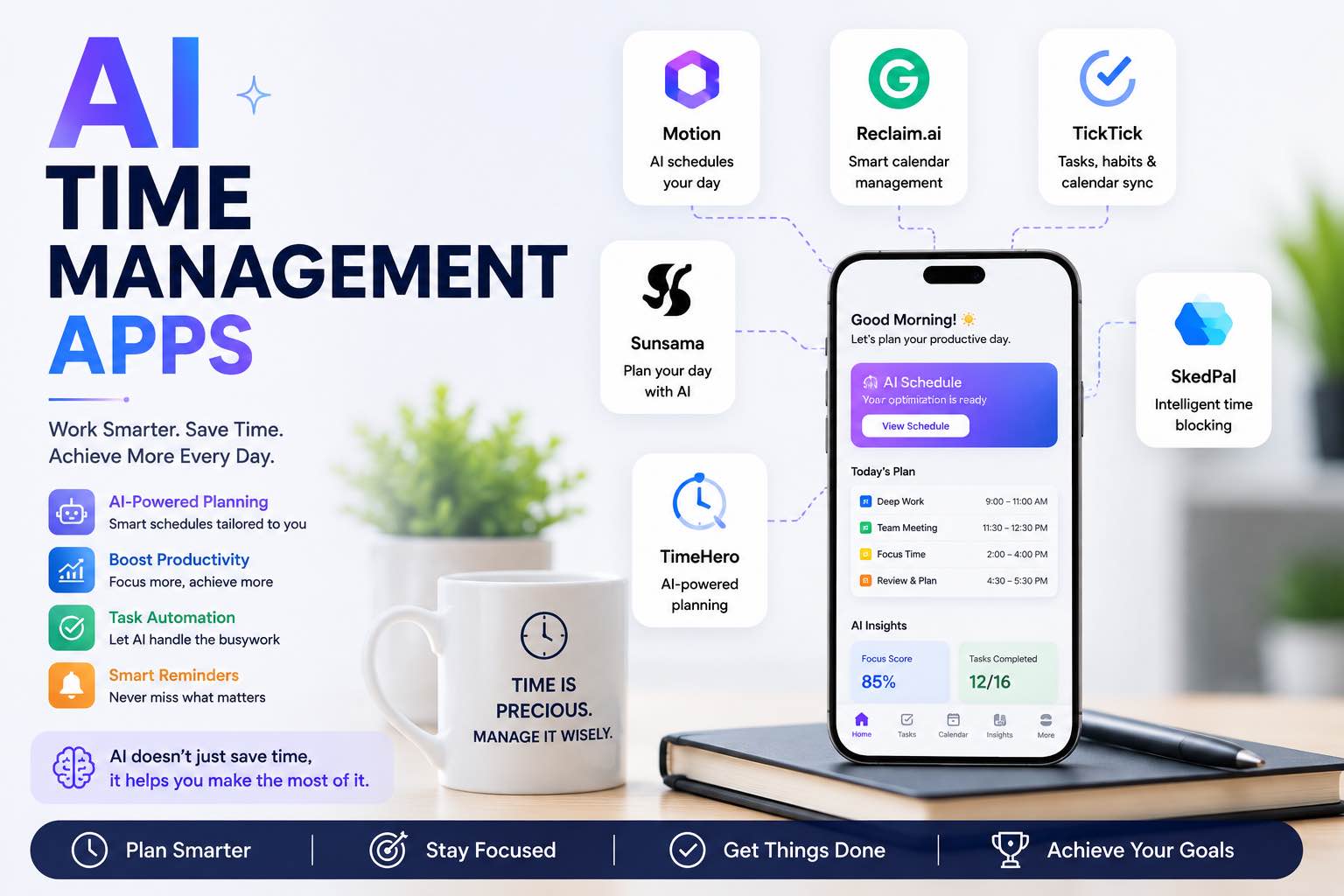
Workflows
6 min read
AI Time Management Apps in 2026 (What Actually Saves Your Week)
The best AI time management apps for 2026 — planning, focus, meetings, and task triage — plus a simple system you can run without tool overload.
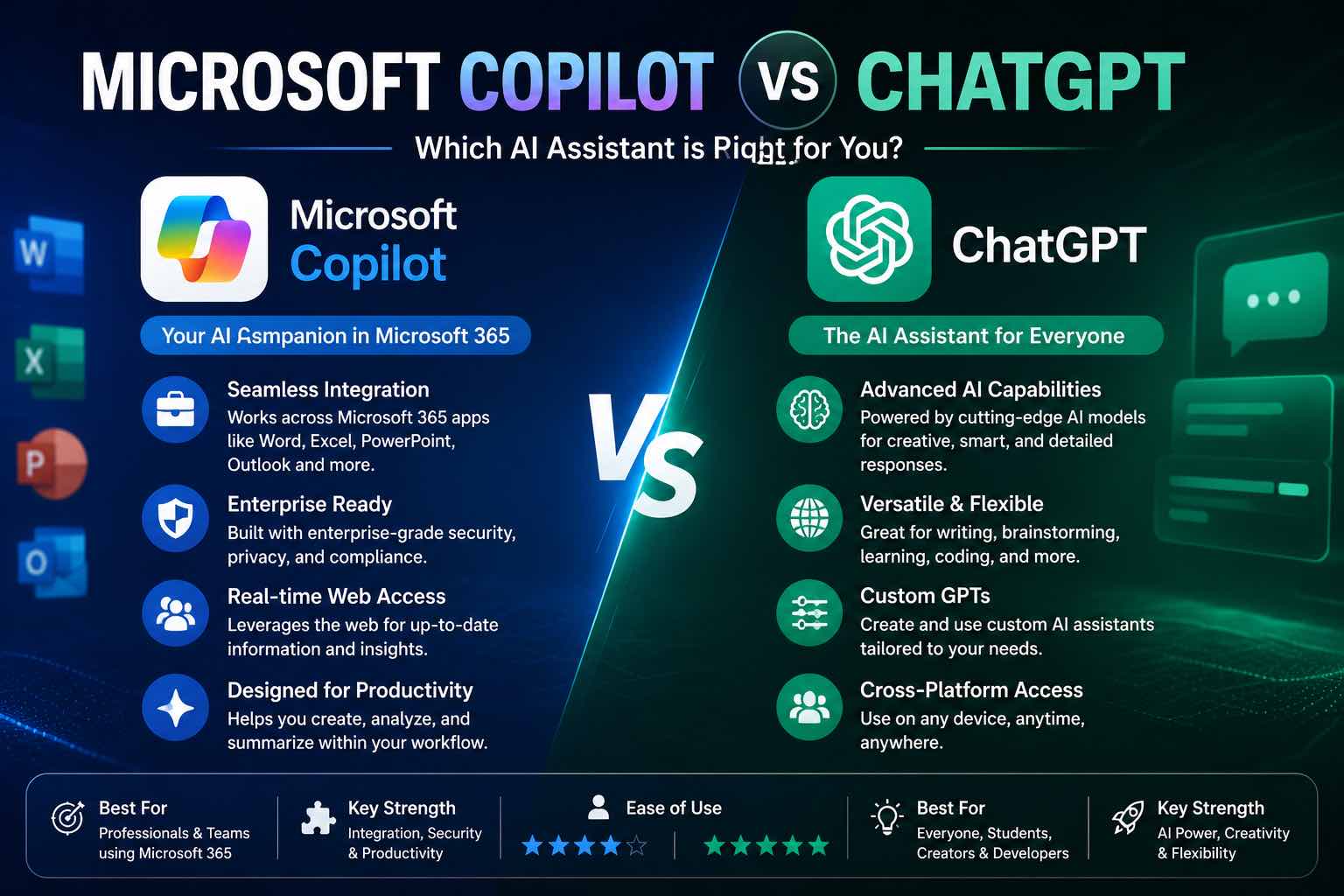
Comparisons
6 min read
Microsoft Copilot vs ChatGPT (2026): Which Should You Use?
Microsoft Copilot vs ChatGPT compared for work, Office apps, writing, and everyday tasks — strengths, weaknesses, pricing mindset, and which to pick first.
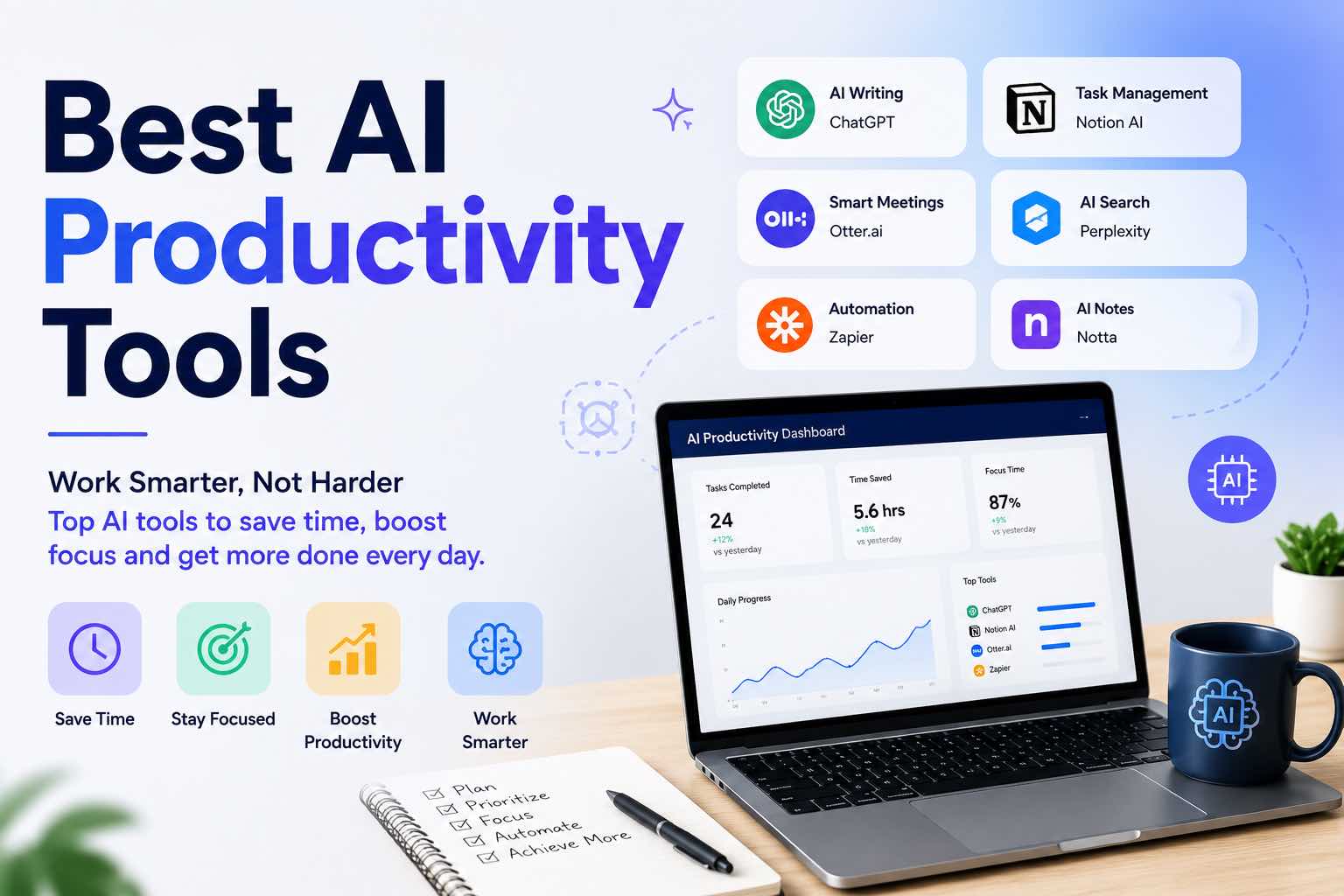
Workflows
7 min read
Best AI Productivity Tools in 2026 (Practical Stack That Saves Hours)
The best AI productivity tools for 2026 — writing, meetings, email, notes, and automation — plus a simple stack you can set up in one afternoon.
AI Tools
5 min read
The Practical AI Toolkit for Solo Operators (2026)
A clear starter stack of AI tools for creators and solo operators — what to use, what to skip, and how to set it up in one afternoon.

Mental Models
5 min read
Lattice Thinking: How to Connect Ideas Without Drowning in Notes
A practical method for building a personal idea lattice — the missing structure between scattered notes and genuine insight.

Systems Thinking
5 min read
Designing Personal Systems That Survive Contact With Real Weeks
Most personal operating systems die by Wednesday. Here is how to design workflows that bend under load instead of shattering.

AI Tools
5 min read
How Small Businesses Can Use ChatGPT (Practical 2026 Guide)
How small businesses can use ChatGPT for customer replies, marketing drafts, SOPs, and admin work — with copy-paste prompts and a safe weekly workflow.

AI Trends
6 min read
The Future of AI in Everyday Life (2026 Reality Check)
How AI will show up in everyday life — home, work, learning, health, and money — what’s already here, what’s coming next, and how to prepare without the hype.