
Lattice Thinking: How to Connect Ideas Without Drowning in Notes
A practical method for building a personal idea lattice — the missing structure between scattered notes and genuine insight.
Personal knowledge systems fail in a predictable way: people collect endlessly, then confuse storage with understanding.
If you are part of the AutoThinkers audience — researchers, indie hackers, analysts, writers — you probably already have notes. The problem is not capture. The problem is structure that creates new claims.
Lattice thinking is a method for connecting ideas so they can bear weight.
What a lattice is (and is not)
A lattice is a network of concepts with explicit relationships:
- supports
- contradicts
- specializes
- causes
- is an example of
It is not a folder tree. It is not a dump of highlights. It is not a second brain that quietly becomes a junk drawer with better fonts.
The goal of a lattice is reusable judgment: when a new fact arrives, you know where it attaches — and what changes if it is true.
Why most PKM collapses
Three failure modes dominate:
- Collector’s fallacy — saving replaces thinking
- Orphan notes — no outgoing links, no questions
- Premature ontology — tagging everything before you know what matters
Lattice thinking postpones taxonomy and prioritizes load-bearing links.
The five-node starter lattice
Begin with five node types only:
- Question — unresolved, valuable, specific
- Claim — a falsifiable statement
- Evidence — observation, citation, experiment
- Model — a reusable explanation
- Decision — a choice made under uncertainty
Example from a product research lattice:
- Question: Why do power users churn after month two?
- Claim: They outgrow our templates but cannot extend them.
- Evidence: 11 exit interviews; 7 mention “hit a ceiling.”
- Model: Tooling retention follows an extensibility curve.
- Decision: Ship custom fields before another template pack.
Notice what happened: notes became a chain that can be argued with.
How to grow the lattice without drowning
Rule 1: Every new note must answer “attaches to what?”
If you cannot name a parent question, claim, or model, the note is probably entertainment.
Rule 2: Prefer verbs over tags
Instead of tagging #retention, write:
Evidence supports Claim: extensibility ceiling drives churn.
Relationships are the product.
Rule 3: Keep a contradiction log
Insight concentrates where models break. Maintain a small list titled “Things my model cannot explain.” Visit it weekly.
Rule 4: Promote only after friction
Do not turn every idea into a model. Promote a claim to a model only after it survives contact with at least two domains or datasets.
A weekly synthesis ritual (45 minutes)
Use this exact sequence:
- 10 min — Review new captures; delete 30% ruthlessly
- 15 min — Attach survivors to questions/claims with verbs
- 10 min — Update one model that gained or lost support
- 10 min — Write a 150-word “thinking memo” for future you
The memo is mandatory. Without it, your lattice is a graph nobody reads — including you.
Tools are secondary (but choose deliberately)
Any tool works if it supports:
- bidirectional links
- fast capture
- readable long-form notes
- export (so you are not hostage)
Obsidian, Notion, Logseq, plain Markdown — irrelevant compared to relational discipline.
If your tool makes linking annoying, you will stop linking. That is a product decision disguised as a personality flaw.
Worked example: from article to lattice
Suppose you read an essay on attention budgets. A weak response is highlighting 20 sentences. A lattice response looks like this:
Question: What operating constraints actually improve judgment quality?
Claim: Protecting two daily maker blocks outperforms optimizing task tools.
Evidence: Author’s case study + your own calendar experiment next week.
Model: Attention is capital with opening balances and leak rates.
Decision: Pilot maker blocks Tue/Thu for two weeks; measure shipped artifacts.
You leave the article with a test, not a quote collection.
Metrics that matter
Track these monthly:
- Number of active questions (aim for 3–7)
- Claims with at least one linked evidence node
- Decisions revisited after new evidence
- Memos written
Vanity metrics: total notes, streak days, plugin count.
Closing
Lattice thinking is how niche experts compound. Collectors accumulate. Thinkers connect.
If you want a practical default: start tomorrow with one question, one claim, and one piece of evidence. Link them with a verb. Write a short memo. Repeat weekly until your notes start arguing back — that is when a knowledge system becomes a thinking partner.
Related Articles
Keep exploring on AutoThinkers — these 7 guides pair well with this one:
- The Attention Budget: Why Deep Thinkers Treat Focus Like Capital
- Designing Personal Systems That Survive Contact With Real Weeks
- Prompt Craft Tutorial: Write AI Prompts That Survive Real Work
- The Practical AI Toolkit for Solo Operators (2026)
- Tutorial: Build an AI Content Workflow in 60 Minutes
- AI for Students: How to Study Smarter with ChatGPT, Claude & Free AI Tools (2026 Guide)
- AI for Small Business: A Practical Playbook That Pays for Itself
Keep exploring
Related Articles
Continue with 8 closely related AutoThinkers guides — more tutorials to deepen your AI workflow.

Deep Work
6 min read
The Attention Budget: Why Deep Thinkers Treat Focus Like Capital
Most knowledge work fails not from lack of intelligence, but from bankrupt attention. Here is a practical operating system for protecting cognitive capital.
Comparisons
6 min read
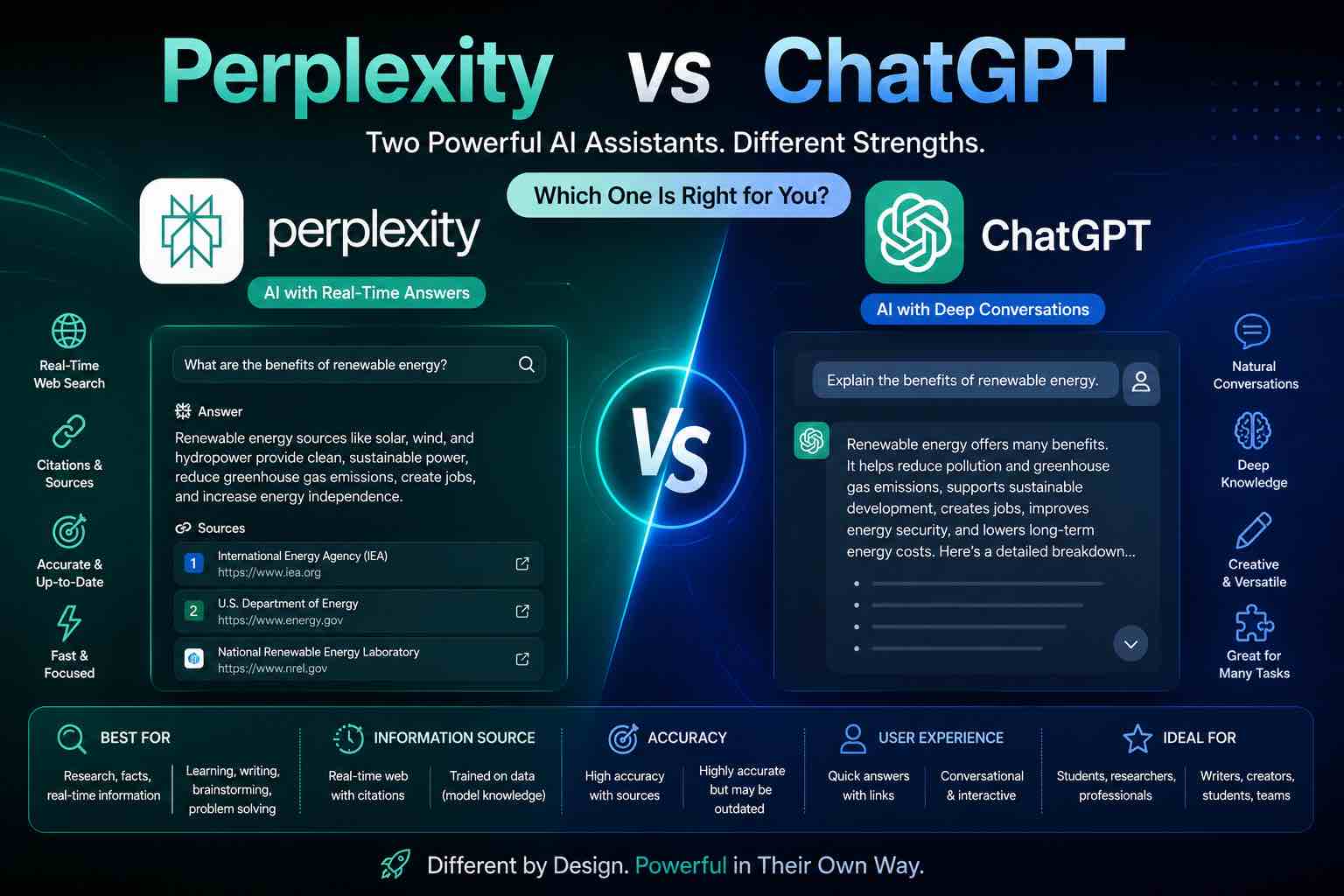
Perplexity vs ChatGPT (2026): Which AI Should You Use?
Perplexity vs ChatGPT compared for research, citations, writing, and everyday work — when to search with sources, when to draft, and which to pick first.
Workflows
7 min read
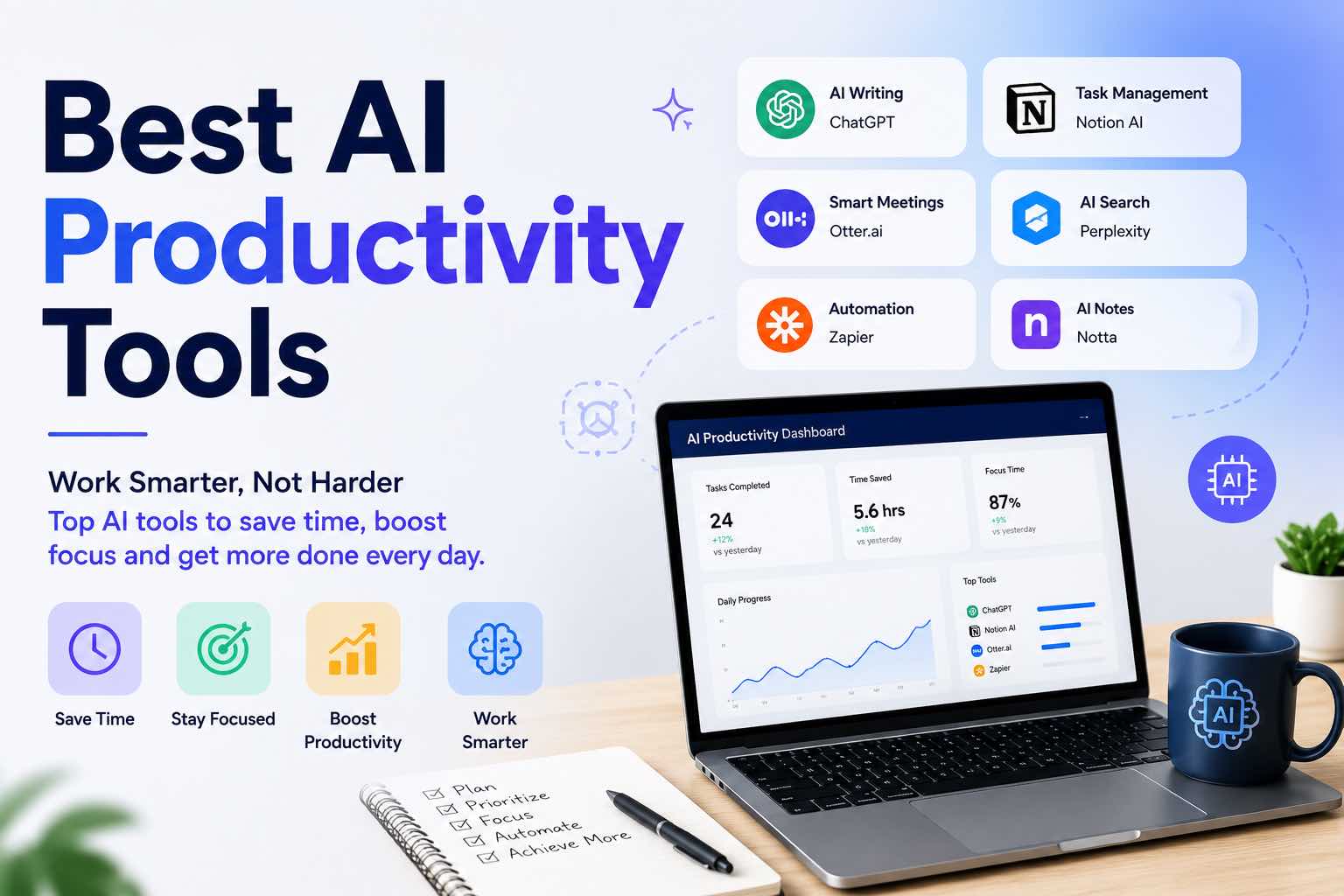
Best AI Productivity Tools in 2026 (Practical Stack That Saves Hours)
The best AI productivity tools for 2026 — writing, meetings, email, notes, and automation — plus a simple stack you can set up in one afternoon.

Systems Thinking
5 min read
Designing Personal Systems That Survive Contact With Real Weeks
Most personal operating systems die by Wednesday. Here is how to design workflows that bend under load instead of shattering.

AI Content Creation
6 min read
Best AI Voice Generators in 2026 (Practical Creator Guide)
Compare the best AI voice generators in 2026 for YouTube, podcasts, courses, and product demos — quality, cloning ethics, pricing mindset, and which tool to pick first.

Workflows
6 min read
AI Time Management Apps in 2026 (What Actually Saves Your Week)
The best AI time management apps for 2026 — planning, focus, meetings, and task triage — plus a simple system you can run without tool overload.

AI Tools
5 min read
How Small Businesses Can Use ChatGPT (Practical 2026 Guide)
How small businesses can use ChatGPT for customer replies, marketing drafts, SOPs, and admin work — with copy-paste prompts and a safe weekly workflow.

Tutorials
7 min read
AI for Students: How to Study Smarter with ChatGPT, Claude & Free AI Tools (2026 Guide)
Learn how to use AI for students the right way — study plans, note summaries, essay outlines, exam prep prompts, and academic integrity tips in one practical 2026 guide.